EMG Analysis: Measuring the Muscle Behind Your Bite
EMG Analysis
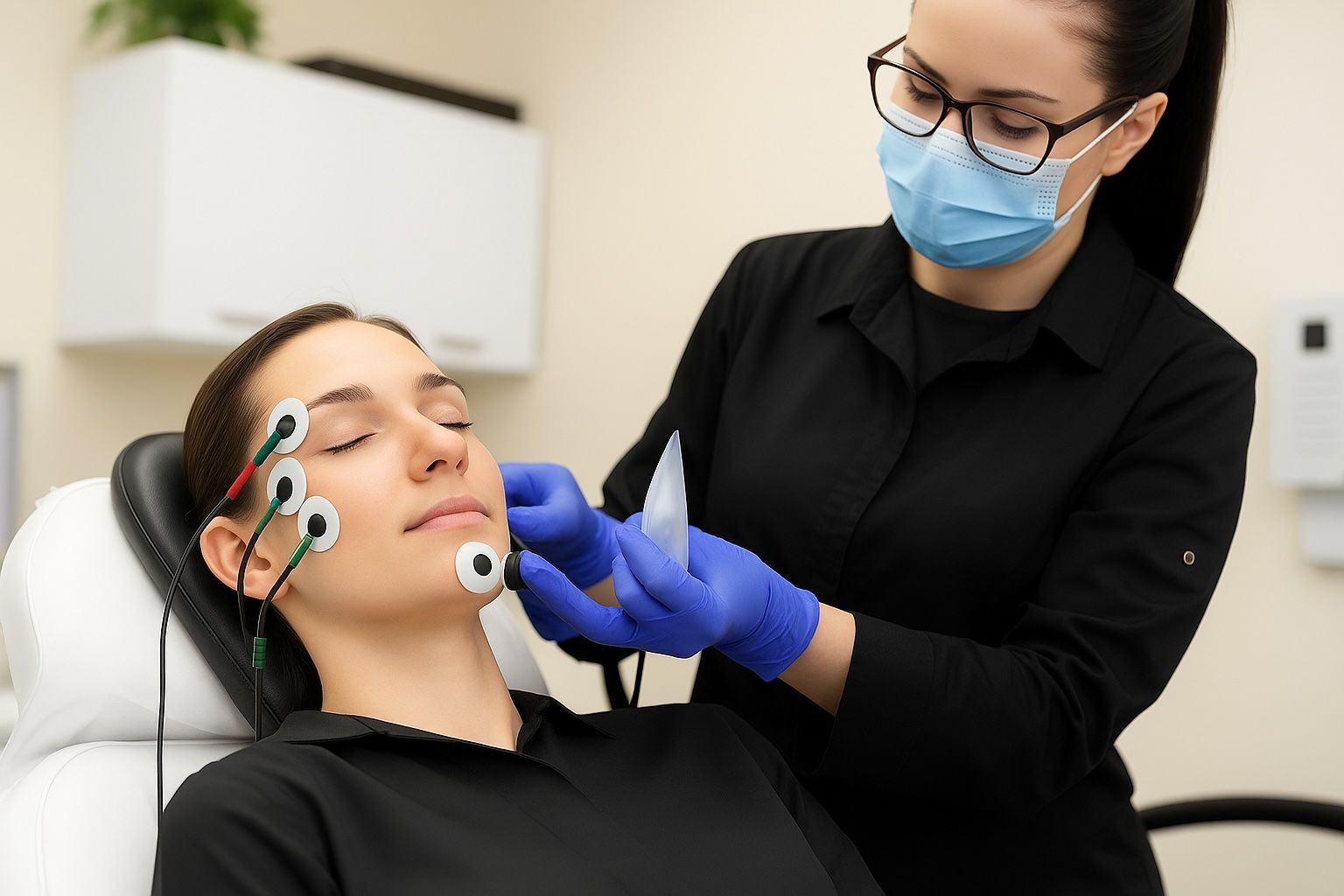
EMG Analysis measures the activity of your jaw muscles as they work, helping us understand how they respond to your bite in real time. Small, painless surface sensors record electrical signals from key muscles around the jaw and temples.
These readings show whether your muscles are balanced, strained, or overactive, information that can’t be seen through visual exams alone. At TMJ Clinic London, EMG Analysis works hand-in-hand with T-Scan™ Bite Analysis to provide a complete picture of your bite and muscle function.
Together, they reveal the true source of tension or discomfort, allowing us to restore harmony between your teeth, muscles, and joints for long-term comfort and stability.
Measured in microvolts
EMG sensors measure electrical signals as small as one-millionth of a volt, allowing dentists to detect tension you can’t feel — long before pain develops.
Powerful jaw muscles
The masseter can generate bite forces over 200 pounds of pressure, but even slight imbalance can overwork it EMG shows exactly when that happens.
Hidden muscle strain
Two bites can look identical, yet one may overload key muscles by up to 300% more effort. EMG exposes those hidden imbalances and guides precise, gentle corrections.
How EMG Analysis Works
The Digital Way to Understand Your Bite
Muscle sensors
record activity
Small adhesive pads are placed on key jaw and temple muscles to detect their activity, no needles, no discomfort.
Real-time patterns
appear
As you bite, move, or relax, the sensors record electrical signals that show how your muscles contract and release in real time.
Results guide precise treatment
The readings create a visual graph of muscle performance, helping your clinician spot imbalance, fatigue, or overactivity and guide precise treatment.
Who Benefits Most from EMG Analysis
At TMJ Clinic London, we often see patients who have tried to relieve jaw pain, clenching, or muscle fatigue without lasting results. These issues often begin in the muscles themselves, not just the bite. If this sounds familiar, EMG Analysis can uncover the hidden tension behind your discomfort and guide treatment that truly restores balance.
You May Benefit If You
Clench or grind your teeth during sleep or stressful moments.
Experience headaches, neck pain, or ear discomfort linked to jaw strain.
Notice uneven muscle movement when you open or close your mouth.
Have persistent jaw discomfort despite previous dental or TMJ treatments.
Feel muscle tightness, fatigue, or tenderness around your jaw or temples.
Wake up with jaw or facial tension that eases through the day.
FAQs
Is EMG the same as T-Scan™?
No. T-Scan™ analyses how your teeth come together, while EMG focuses on how your muscles respond.
Used together, they give a complete picture T-Scan™ reveals where pressure occurs, and EMG shows how your muscles react to it.
Is EMG safe or painful?
Completely safe and painless. EMG uses small adhesive sensors placed on the skin, not needles.
It’s non-invasive, comfortable, and suitable for all ages and dental conditions.
What does an EMG test feel like?
You’ll simply sit comfortably while small sensors are placed on your jaw and temples.
You may be asked to open, close, or gently clench your teeth — the system records muscle activity without any sensation.
How long does an EMG appointment take?
Most scans take 10–15 minutes, often performed as part of a full TMJ or bite assessment.
You’ll see your results immediately as a visual graph that we review together.
What can EMG reveal that a normal exam can’t?
Even when the jaw joint looks healthy, EMG can show overactive or unbalanced muscle patterns that cause tension, headaches, or fatigue.
It helps locate the true source of discomfort , not just the symptoms.
Will I need EMG more than once?
Usually not. One baseline recording and a follow-up after treatment are often enough.
We may recommend re-testing if you undergo new dental work or if symptoms return.
Can EMG Analysis be used with other TMJ therapies?
Yes. EMG is often combined with T-Scan™ and DTR Therapy to measure both muscle and bite balance, ensuring your treatment is precisely calibrated.







Dr Rena Uberoi GDC No: 69753
This Is It Dental
99 Harley Street, London, W1G 6AQ
Contact Us
Tel: +44 (0) 20 7486 5180
Out of Hours Emergency : 07760857365
Opening Hours
Mon- Friday 9.30am-5.30pm
Saturday:Appointment On Request
Sunday Closed
Terms & Policies